WORLD Heavyweight Boxing

Month
Date
,
Year
Legendary Contender
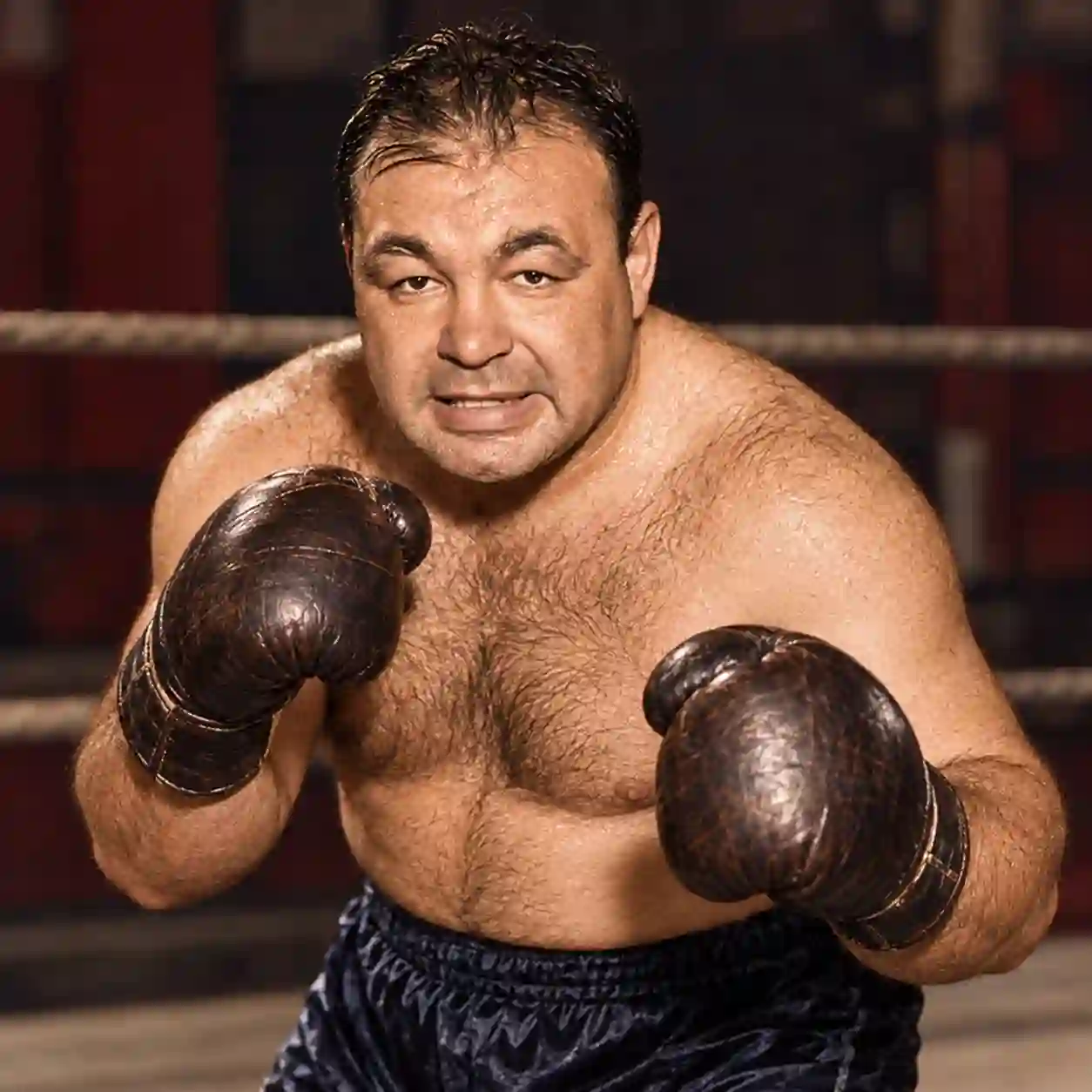
Orange, NJ, USA - Tony “Two Ton” Galento was one of the most colourful, unconventional and dangerous heavyweight contenders of boxing’s golden era.

Standing approximately 5-foot-9 and frequently weighing more than 230 pounds, Galento looked nothing like the carefully conditioned athletes who surrounded him. He drank beer, smoked cigars, worked in a neighbourhood tavern and treated conventional training methods with open contempt.
Yet beneath the spectacle was a genuinely formidable fighter. Galento was enormously strong, remarkably durable and armed with a brutal left hook. In 1939, he used that punch to accomplish the nearly unthinkable—knocking world heavyweight champion Joe Louis to the canvas.
Galento never won the championship, but his fearless challenge of Louis and unforgettable personality secured his permanent place in heavyweight history.
Dominick Anthony Galento was born on March 12, 1910, in Orange, New Jersey.
The son of Italian immigrants, Galento grew up in a working-class environment and developed the rugged strength that would later define his boxing career. He worked several physical jobs, including delivering ice and beer, while establishing himself as a local fighter.
Despite the obvious connection to his heavyset build, the nickname “Two Ton” reportedly originated from his delivery work. According to boxing lore, Galento once arrived late for a fight and explained that he had been delayed because he had two tons of ice to deliver.
The name followed him for the remainder of his life.
Galento compiled a strong amateur record before turning professional in 1928. He quickly became known for fighting frequently, accepting bouts on short notice and approaching every opponent with the same uncomplicated intention: get close and hit him as hard as possible.
Galento’s appearance and lifestyle invited ridicule, but opponents soon learned that underestimating him was dangerous.
He fought from a low crouch that made him difficult to hit cleanly and allowed him to spring forward with his left hook. His short arms were a disadvantage at long range, but Galento was exceptionally powerful inside, where he could maul, wrestle and punish opponents with compact punches.
He was also far more capable than his crude reputation suggested. Galento could use a double jab, feint his way into punching range and create openings for his left hand.
His style was rough and frequently crossed the boundaries of the rules. He used his head, elbows and thumbs, struck during clinches and turned fights into physical ordeals. Clean technique was secondary to breaking an opponent’s rhythm and willingness.
Galento possessed an extraordinary tolerance for punishment. He could absorb punches that would stop other heavyweights and continue advancing, often grinning or shouting insults as he came forward.
Galento made little effort to imitate the disciplined habits expected of a championship contender.
He claimed to train on beer, hamburgers and spaghetti. Stories circulated of him drinking between fights, avoiding roadwork and preparing for major contests in the same tavern environment where he worked.
Some of these tales were exaggerated for publicity, but Galento understood that his personality sold tickets. His willingness to play the role of the beer-drinking neighbourhood brawler made him one of boxing’s most recognizable attractions.
On one remarkable day in 1931, Galento fought three opponents and knocked out all three. Before another contest, he reportedly won a bet by eating 52 hot dogs and then stopped his opponent later that evening.
The stories were outrageous, but Galento continued defeating legitimate heavyweights. His success made it impossible to dismiss him as merely a novelty act.
By the late 1930s, Galento had fought his way into the upper reaches of the heavyweight division.
He recorded important victories over men such as Nathan Mann, Leroy Haynes and Jorge Brescia. His relentless aggression and knockout power eventually earned him recognition as the leading challenger to world heavyweight champion Joe Louis.
Galento relentlessly taunted Louis before their fight. In his thick New Jersey accent, he promised reporters that he would “moider da bum.”
Few observers believed he could defeat the champion.
Louis was approaching the height of his powers and had destroyed his previous three challengers in the opening round. He was faster, taller, technically superior and one of the most devastating finishers boxing had ever produced.
Galento, however, possessed two qualities that could never be safely dismissed: tremendous courage and a fight-changing left hook.
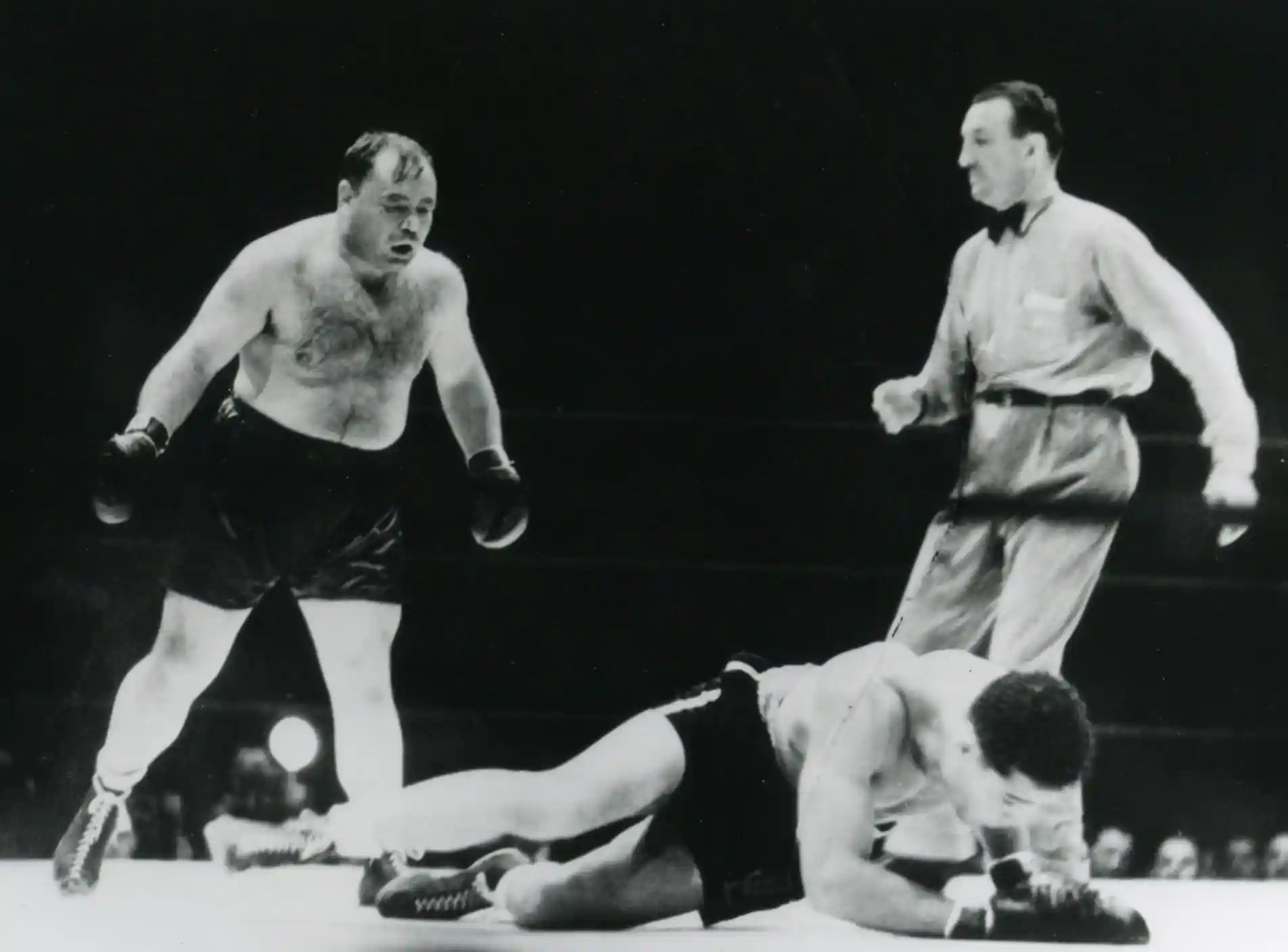
Tony Galento challenged Joe Louis for the world heavyweight championship on June 28, 1939, before nearly 35,000 spectators at Yankee Stadium in New York.
Galento weighed 234 pounds, 33 pounds heavier than the champion.
Louis dropped him in the second round and punished him badly, but Galento continued advancing. Bloodied and absorbing clean punches, he refused to retreat.
In the third round, Galento landed the punch that defined his career.
From close range, he connected with a powerful left hook that sent Louis to the canvas. The seemingly invincible champion landed heavily and briefly steadied himself with one hand before rising.
For a few extraordinary seconds, Tony Galento stood at the summit of heavyweight boxing.
He was unable to follow up quickly enough to finish the champion. Louis recovered, fought with greater caution and then launched a devastating assault in the fourth round. After a succession of unanswered punches left Galento bloodied and helpless, referee Arthur Donovan stopped the contest at 2:29.
Galento had lost, but he had given Louis one of the most dramatic battles of his championship reign. Louis later described it as one of his toughest fights.
The ridicule surrounding Galento had disappeared. He had entered the ring as a colourful underdog and left it as the man who had knocked down Joe Louis.
Galento returned to the ring less than three months later against leading contender Lou Nova.
Their September 1939 encounter became one of the roughest major heavyweight fights of the era. The action included butting, low blows, elbows, wrestling and nearly every other form of borderline conduct imaginable.
Galento thrived in the chaos.
He battered Nova over 14 punishing rounds before scoring the knockout. The victory proved that Galento remained a serious contender after the Louis defeat and was not simply a one-fight curiosity.
His position declined during the following years. Galento was stopped by former heavyweight champion Max Baer in 1940 and by Max’s younger brother, Buddy Baer, in 1941.
Years of difficult fights, inconsistent conditioning and punishment eventually took their toll. Galento continued competing and appearing in exhibitions before ending his boxing career during the 1940s.
Retirement from boxing did not mean retirement from spectacle.
Galento became involved in professional wrestling as both a competitor and referee. He participated in promotional stunts involving a bear, a kangaroo and even an octopus, extending the larger-than-life image he had created during his fighting career.
He also appeared in film, including the Academy Award-winning On the Waterfront, starring Marlon Brando.
Galento owned and operated the Nut Club, a neighbourhood tavern in Orange, New Jersey. The establishment became a gathering place where visitors could hear stories from the former contender who had once floored the great Joe Louis.
He was inducted into the New Jersey Boxing Hall of Fame in 1970.
Galento suffered serious complications from diabetes later in life. His left leg was amputated in 1977, and his right leg was removed in July 1979.
Tony Galento died of a heart attack on July 22, 1979, at the age of 69.
Tony Galento is often remembered as a comic figure—the round, beer-drinking bartender who ignored training conventions and promised to “moider” Joe Louis.
That image was real, but incomplete.
Galento was also a dangerous and accomplished heavyweight who fought more than 100 professional contests, defeated leading contenders and earned his championship opportunity through results rather than publicity alone.
He possessed an exceptional left hook, enormous physical strength and a capacity for punishment that bordered on extraordinary. His tactics were crude, his conditioning was inconsistent and his behaviour frequently outrageous, but his courage was beyond dispute.
When Galento faced one of the greatest heavyweight champions in history, he did not enter merely to survive. He attacked Joe Louis, knocked him down and forced the champion to produce a violent finish.
“Two Ton” Tony Galento never held the heavyweight title, but for one unforgettable moment at Yankee Stadium, he had the championship within the reach of his left fist.

Top Heavyweight Boxing covers the past, present and future of boxing's premier division. Copyright© 2026
Powered by Digital Dynasty Design