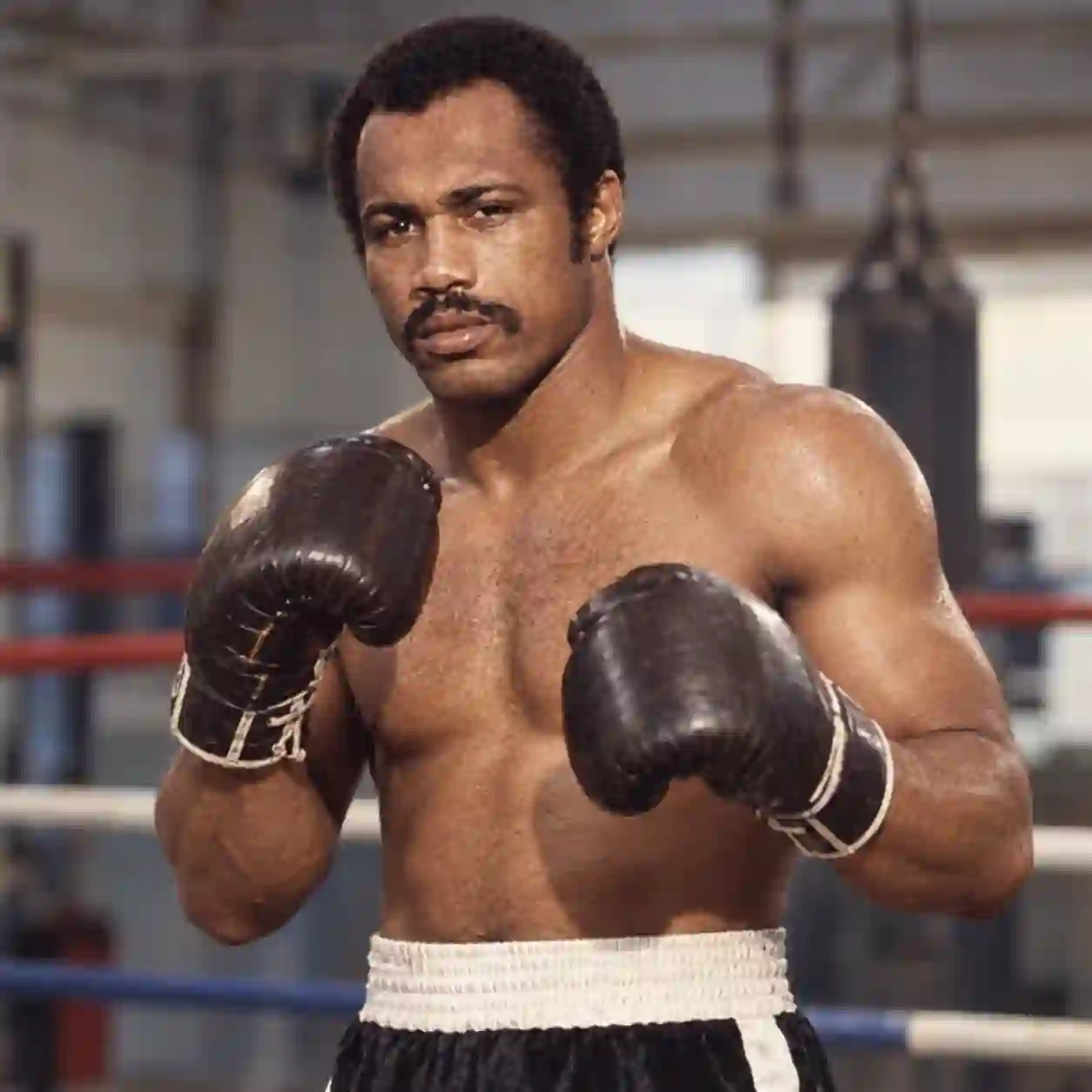
San Diego, CA, USA - Ken Norton was one of the defining heavyweights of boxing’s greatest era—a powerful, superbly conditioned former Marine whose unusual style troubled Muhammad Ali like no other opponent. Norton defeated Ali in their first meeting, pushed him to the limit in two disputed rematches and later engaged Larry Holmes in one of the greatest heavyweight championship fights ever staged.
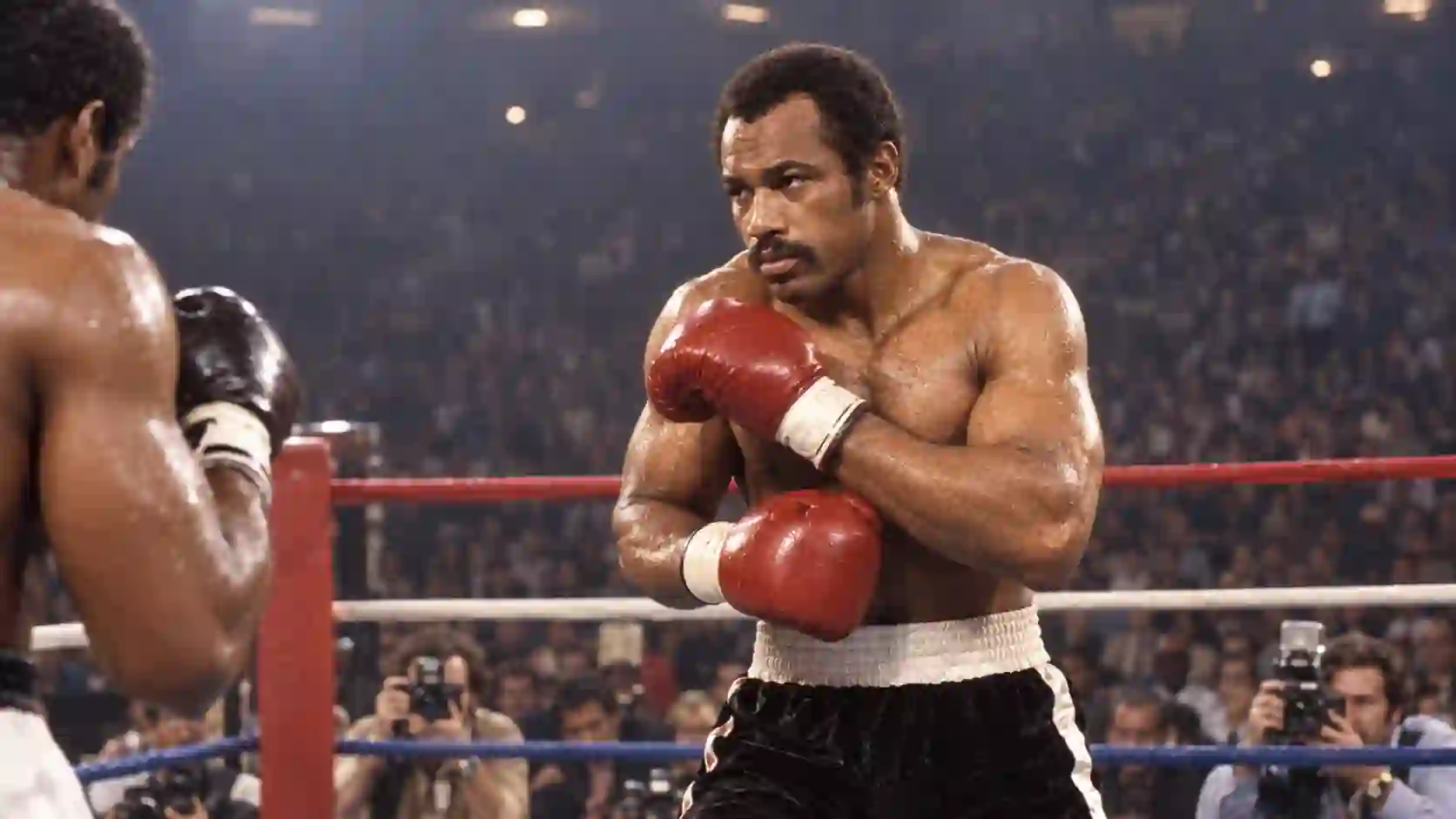
Ken Norton advances behind his distinctive cross-armed guard, the unorthodox style and physical strength that made him one of the most difficult heavyweights of his era.
Norton’s career cannot be measured by the length of his title reign. He shared the ring with an extraordinary collection of heavyweights, defeated several leading contenders and earned recognition as WBC champion during a period crowded with historic names. At his best, his strength, pressure, cross-armed defence and thudding left hook made him an exceptionally difficult man to fight.
He finished his professional career at 42-7-1 (33 KOs), but the numbers reveal only part of his importance. Norton became immortal the night he broke Ali’s jaw—and strengthened that legacy every time the two men met.
An exceptional young athlete
Kenneth Howard Norton was born on August 9, 1943, in Jacksonville, Illinois. Long before he entered a boxing ring, he established himself as an outstanding all-around athlete.
At Jacksonville High School, Norton excelled in football and track and field. During one meet, he reportedly entered eight events and won seven of them. His dominance contributed to the introduction of what became known locally as the “Ken Norton Rule,” limiting the number of events in which one athlete could compete.
Norton attended Northeast Missouri State College, now Truman State University, on a football scholarship and studied elementary education. His stay at the school was relatively brief, however, and in 1963 he enlisted in the United States Marine Corps.
The decision changed his life.
The Fighting Marine
Norton began boxing during his service in the Marines. Although he was a late arrival to the sport, his athleticism, discipline and powerful physique allowed him to advance rapidly.
He compiled an amateur record of 24-2, won three All-Marine heavyweight championships and collected additional military and amateur honours. The structure of Marine life suited him, while its boxing program gave him the opportunity to develop against experienced competition.
Norton completed his service in 1967 and turned professional later that year. He won his debut by stopping Grady Brazell in the fifth round in San Diego.
He possessed obvious physical gifts but was still learning his craft. At approximately 6-foot-3 with an 80-inch reach, Norton had the dimensions of a modern heavyweight, yet he did not box like a conventional tall fighter. His rhythm was awkward, his punches came from unusual angles and his defensive posture could make opponents uncomfortable.
Those characteristics would eventually become the foundation of his success.
1970's contender Ken Norton, aka "The Jaw Breaker." The ex-Marine took wins from Jerry Quarry, Jimmy Young, Duane Bobick, Boone Kirkman and of course, Muhammad Ali. Gave a prime Larry Holmes the toughest fight of his career. Record: 42-7-1. #Heavyweight#History#Boxingpic.twitter.com/mgb6D0dyiC
Norton won his first 16 professional fights before encountering Venezuelan puncher José Luis Garcia in July 1970. Garcia dropped him repeatedly and stopped him in the eighth round, exposing technical weaknesses that still needed to be addressed.
Rather than ending Norton’s progress, the defeat helped reshape him.
Under the guidance of respected trainer Eddie Futch, Norton developed the distinctive cross-armed defence for which he became known. He often carried his right hand across his body and held his left lower, allowing him to block, parry and counter from unconventional positions. He applied steady forward pressure behind a heavy jab and delivered punishing hooks to the head and body.
Norton was particularly effective against boxers who required time and space to establish their rhythm. His own movements were difficult to read, and his physical strength allowed him to crowd opponents, disrupt their combinations and force them to fight at uncomfortable angles.
A run of victories rebuilt his standing. In November 1972, Norton stopped respected contender Henry Clark in nine rounds. That performance helped secure the opportunity that transformed his career: a fight with Muhammad Ali.
The night Norton broke Ali’s jaw
Norton entered his March 31, 1973, meeting with Ali as a substantial underdog. Ali was a former heavyweight champion, an international superstar and still regarded as one of the best fighters in the world. Norton was respected within boxing circles but remained largely unknown to the wider public.
From the opening rounds in San Diego, Norton refused to behave like an opponent brought in to showcase Ali.
He pressured Ali behind his jab, struck effectively to the body and disrupted the former champion’s timing with his cross-armed defence and irregular rhythm. At some point during the fight, one of Norton’s punches fractured Ali’s jaw. Ali completed all 12 rounds despite the injury, but Norton earned a split-decision victory and the NABF heavyweight championship.
It was one of the great upsets of the 1970s.
The result immediately made Norton a leading figure in the heavyweight division. More importantly, it established a stylistic rivalry that would define both men’s careers. Ali’s speed, intelligence and improvisation worked against almost everyone, but Norton’s pressure and awkwardness repeatedly denied him the distance and tempo he preferred.
They met again on September 10, 1973, at the Forum in Inglewood, California. The rematch was another closely contested 12-round fight, but this time Ali received the split decision. The rivals had divided two narrow verdicts and appeared remarkably well matched.
Ken Norton and Larry Holmes on the cover of Big Book of Boxing in 1979. Their 1978 clash, one of the all-time greatest 15 rounders, saw Holmes win a split decision. No way a rematch could top the original but we're still wishing it happened. #Heavyweight#History#Boxingpic.twitter.com/glPDctsyy5
Norton’s performances against Ali earned him a major fight with heavyweight champion George Foreman in Caracas, Venezuela, on March 26, 1974.
Foreman presented an entirely different challenge. Instead of attempting to outbox Norton, the champion attacked him with overwhelming force. Foreman hurt Norton in the second round and knocked him down three times before the fight was stopped.
The loss revealed a central contradiction in Norton’s career. His style was exceptionally effective against skilled, mobile boxers, but he could be vulnerable against aggressive punchers who forced him backward before he could establish his own pressure.
Norton recovered and returned to the leading ranks. In March 1975, he stopped Jerry Quarry in the fifth round of an entertaining battle between two established contenders. Later that year, he avenged his first professional defeat by knocking out José Luis Garcia in five rounds.
Those victories positioned him for a third encounter with Ali—this time for the heavyweight championship.
The disputed third fight with Ali
Ali and Norton met for the final time at Yankee Stadium on September 28, 1976. Their third bout was fought over 15 rounds before a large crowd in difficult conditions on a cool New York night.
Once again, Norton’s style caused the champion enormous problems. He moved forward, worked Ali’s body and prevented him from controlling the fight consistently with his jab. Ali produced strong moments and rallied when necessary, but Norton believed he had built a winning lead.
All three officials awarded the fight to Ali, who retained the championship by unanimous decision. The verdict was immediately disputed and remains one of the most debated decisions in heavyweight history. Numerous ringside observers scored the fight for Norton, who maintained for the rest of his life that he had done enough to win.
Across 39 rounds against Ali, Norton had won one official decision and lost two—but neither defeat was conclusive. Of all Ali’s great rivals, Norton was the one whose style he never completely solved.
Ken Norton, one of the very best big men in the incredible decade of the 1970's. Wins over Muhammad Ali, Jerry Quarry and Jimmy Young. Gave Larry Holmes the toughest fight of his career. #Heavyweight#History#Boxing#Legendpic.twitter.com/K6ej0vZ8p1
— Heavyweight History (@HVYWeightHeroes) July 6, 2022
The road to the WBC championship
Norton continued pursuing another title opportunity. In May 1977, he demolished the previously unbeaten Duane Bobick in just 58 seconds at Madison Square Garden. Bobick had entered the professional ranks as a celebrated prospect, but Norton overwhelmed him almost immediately.
After stopping Lorenzo Zanon, Norton faced Jimmy Young in a WBC heavyweight title eliminator on November 5, 1977. Young was a clever and elusive contender who had recently defeated George Foreman. Their tactical 15-round contest ended with Norton receiving a close split decision.
That victory made Norton the WBC’s mandatory challenger.
The championship picture changed when Leon Spinks upset Ali in February 1978. The WBC ordered Spinks to defend against Norton, but Spinks instead chose a more lucrative rematch with Ali. The organization withdrew its recognition from Spinks and, on March 18, 1978, elevated Norton to WBC heavyweight champion based on his eliminator victory over Young.
Norton had finally reached the top of the division, although the unusual circumstances meant that he became champion without winning the title in a conventional championship fight.
His first defence would leave no doubt about his championship quality.
Fifteen rounds with Larry Holmes
On June 9, 1978, Norton defended the WBC title against undefeated challenger Larry Holmes at Caesars Palace in Las Vegas.
Holmes controlled many of the early rounds with one of the finest left jabs in heavyweight history. Norton, making a characteristically determined advance, attacked the body and gradually reduced the challenger’s early advantage. As Holmes slowed, Norton forced the fight into punishing exchanges at close range.
By the championship rounds, both men were exhausted and the contest was almost impossibly close. The 15th round became a sustained exchange between two heavyweights fighting as though the entire contest depended upon its outcome.
It did.
Holmes won by split decision. All three judges scored the fight 143-142, with two favouring Holmes and one favouring Norton. The championship had been decided by a single point on every card.
Holmes went on to dominate the division for seven years and make 20 successful title defences, but he continued to describe Norton as one of the toughest opponents of his career. Norton lost the WBC belt in his first defence, yet the performance became one of the strongest elements of his legacy.
Challenger Ken Norton and world champ Muhammad Ali face off at the weigh-in for their 1976 showdown at Yankee Stadium, their 3rd and final clash. Ali would prevail by 15 round unanimous decision, but many believed the judges got it wrong. #Heavyweight#History#Boxingpic.twitter.com/6dhxdJwQpz
Norton returned with a knockout victory over Randy Stephens but suffered a damaging first-round loss to Earnie Shavers in March 1979. Like Foreman, Shavers possessed the kind of exceptional power capable of preventing Norton from establishing his pressure and rhythm.
A difficult draw with Scott LeDoux followed. Norton then defeated the undefeated Randall “Tex” Cobb by split decision in November 1980, showing flashes of his old strength and determination in a rugged ten-round contest.
That victory led to a final major opportunity against rising contender Gerry Cooney at Madison Square Garden on May 11, 1981. By then Norton was 37 and well beyond his best. Cooney trapped him against the ropes and stopped him just 54 seconds into the opening round.
Norton retired following the defeat. His final record stood at 42-7-1 (33 KOs).
Norton’s boxing style
Norton was one of the most physically imposing heavyweights of his generation. His sculpted physique earned him the nickname “The Black Hercules,” but his success involved much more than appearance.
He fought from an unusual cross-armed guard, applied intelligent pressure and possessed an excellent jab. His left hook was a formidable weapon, particularly to the body, and he could generate considerable power with his right hand. Norton was strongest when moving forward, where his size and strength allowed him to push opponents out of position and wear them down.
His style was a nightmare for boxers who depended on rhythm and movement. Against Ali, Norton could parry the jab, close the distance and force exchanges at moments when Ali wanted to reset. Against Holmes, he survived a difficult beginning and turned a technical contest into a gruelling physical battle.
Norton was less comfortable when forced backward. His stoppage losses to Foreman, Shavers and Cooney have sometimes overshadowed the broader quality of his career, but each came against a dangerous puncher—and the Cooney defeat occurred when Norton was nearing 38.
The fairest assessment considers both sides. Norton was not unbeatable, but against the right opponent, on his best night, he could compete with virtually any heavyweight of his time.
Life beyond boxing
Norton’s striking appearance and public profile also led to acting roles. He appeared in films including Mandingo and Drum, as well as several television productions. He later worked as a commentator, made public appearances and became known as a motivational speaker.
His son, Ken Norton Jr., became a distinguished professional football player and coach. Norton Jr. won three Super Bowls as a linebacker and continued the family’s association with elite professional sports.
In 1986, Norton suffered life-threatening injuries in a car accident. The crash left him with a fractured skull and caused lasting difficulties with his speech and mobility. His recovery required years of therapy and the same determination that had carried him through his boxing career.
Norton endured further health problems, including a series of strokes, later in life. He died in Las Vegas on September 18, 2013, at the age of 70.
Legacy
Ken Norton was inducted into the International Boxing Hall of Fame in 1992. He was also honoured by the United States Marine Corps Sports Hall of Fame, a fitting recognition for the institution in which his boxing career began.
His championship reign was brief and unconventional, but his standing in heavyweight history rests upon far more than possession of a belt. Norton defeated Ali, Quarry, Young, Bobick, Clark and Garcia, while coming within a single point of beating Holmes. He competed during an era containing Muhammad Ali, Joe Frazier, George Foreman, Larry Holmes, Earnie Shavers and a deep field of dangerous contenders.
Norton will always be remembered first as the man who broke Ali’s jaw. That achievement made him famous, but the rivalry that followed proved it was no accident. He fought Ali on nearly even terms three times and may have deserved victories in two of them.
In an era of remarkable heavyweights, Ken Norton was not merely present. He was one of the men who made the era remarkable.