WORLD Heavyweight Boxing

Month
Date
,
Year
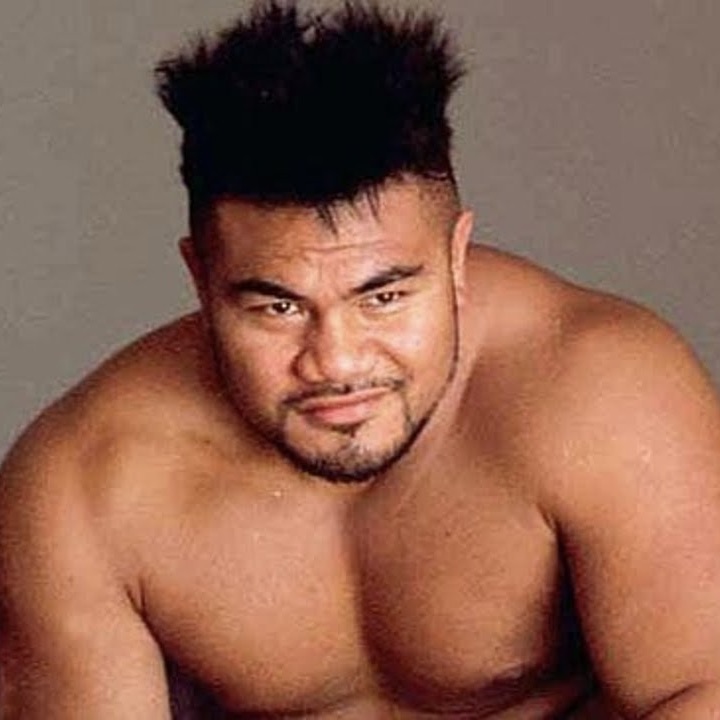
Legendary Contender
David Tua was a Samoan-born New Zealand heavyweight whose left hook made him a danger to opponents from the opening bell to the final round. An Olympic bronze medallist before turning professional, he finished his career with a record of 52-5-2 (43 KOs). He never won a major world heavyweight championship, but his victories over John Ruiz, Oleg Maskaev, Hasim Rahman and Michael Moorer gave his career a lasting place in the division's history.
Tua's appeal was easy to understand. He was compact, powerful and exceptionally difficult to discourage. An opponent could build a points lead against him and still face the possibility of losing everything to one exchange. His career also showed the limits of punching power: the best movers and long-range boxers could deny him the positions he needed to land his most destructive shots.
Born on November 21, 1972, Tua represented New Zealand at the 1992 Barcelona Olympics. He reached the heavyweight semi-finals and earned a bronze medal, losing to Nigeria's David Izonritei. The achievement established his credentials before he entered professional boxing later that year.
The amateur medal mattered because Tua was more than a strong man who happened to punch hard. He brought an established boxing background into the professional ranks. Working with trainer Kevin Barry during the first major phase of his career, he developed into a contender in a heavyweight division filled with accomplished champions and dangerous challengers.
Tua's most famous weapon was his left hook, delivered with the leverage of a broad, compact frame. He could attack the body and then bring the same punch upstairs, making close-range exchanges particularly hazardous. His right hand also contributed to his stoppages; reducing his offence to a single punch misses the speed and force of his combinations.
His durability gave that offence time to work. Tua completed his professional career without a stoppage defeat. That does not mean he was impossible to hurt or knock down, but it does underline how difficult he was to finish. Opponents generally needed to sustain their discipline over the distance rather than expect one clean shot to remove him.
In March 1996, Tua knocked out John Ruiz in just 19 seconds in Atlantic City. Ruiz would later become a WBA heavyweight champion, making the result more significant in retrospect. At the time, it was a startling demonstration of how quickly Tua could close down a fight when an opponent was caught within punching range.
Not all of his important victories came so early. He stopped his former Olympic opponent David Izon in the twelfth round in December 1996, then defeated Oleg Maskaev in the eleventh round in April 1997. Those late finishes were an important part of his threat: surviving the opening rounds did not mean that the danger had passed. Maskaev, like Ruiz, would later hold a major world heavyweight title.
On June 7, 1997, Tua faced unbeaten Ike Ibeabuchi in Sacramento. Their twelve-round contest became one of the defining fights of Tua's career. Both men were willing to exchange at a demanding pace, and neither could secure the finish.
Ibeabuchi won a unanimous decision, handing Tua his first professional defeat. The result ended Tua's unbeaten run, but the fight also strengthened his reputation for toughness. It remains an essential bout for understanding the version of Tua who could combine pressure, sustained work and heavy punching against an opponent willing to meet him in the exchanges.
Tua stopped Hasim Rahman in the tenth round in December 1998. The victory came with controversy surrounding a punch after the bell at the end of the ninth, an important qualification when assessing the result. Rahman would later become world heavyweight champion, adding another future titleholder to Tua's list of victims.
The win helped Tua move towards his only major world title challenge. On November 11, 2000, he faced Lennox Lewis at Mandalay Bay in Las Vegas for the WBC and IBF heavyweight championships, with the IBO belt also at stake. Tua entered with a 37-1 record and the kind of power that made the matchup compelling.
Lewis controlled the distance with his jab, reach and movement. Tua could not consistently get close enough to turn the contest into the fight he wanted. Lewis won a clear unanimous decision. The defeat exposed the central problem Tua faced against an elite long-range boxer: his ability to end a fight depended on first creating the opportunity to land.
Tua remained dangerous after the Lewis defeat. A decision loss to Chris Byrd in 2001 again demonstrated his difficulties against a skilled, elusive opponent, but he stopped Fres Oquendo in the ninth round in 2002.
That August, he needed only 30 seconds to stop former heavyweight champion Michael Moorer in Atlantic City. Unlike Ruiz, Maskaev and Rahman when Tua defeated them, Moorer had already held a world heavyweight championship. The distinction matters: Tua beat several men who became champions, but those wins were not themselves world title victories.
A 2003 rematch with Rahman ended in a draw. Later appearances included a second-round knockout of Shane Cameron in 2009 and two contests with Monte Barrett, the first drawn and the second lost on points. Tua's final bout came against Alexander Ustinov in Hamilton, New Zealand, in November 2013. He lost a unanimous decision and announced his retirement.
Tua's career resists a simple judgement based on the absence of a world championship. His 43 knockout wins, Olympic medal and victories over accomplished heavyweights are substantial achievements. At the same time, his losses to Lewis and Byrd explain why destructive power alone did not carry him to the division's summit.
He belongs in the discussion of heavyweight boxing's outstanding contenders: a fighter whose best punches could alter a contest instantly, whose durability forced opponents to earn their victories, and whose most memorable performances still illustrate both the promise and the limitations of the heavyweight puncher.

Top Heavyweight Boxing covers the past, present and future of boxing's premier division. Copyright© 2026
Powered by Digital Dynasty Design